
Is Wingfoiling Safe? Yes!
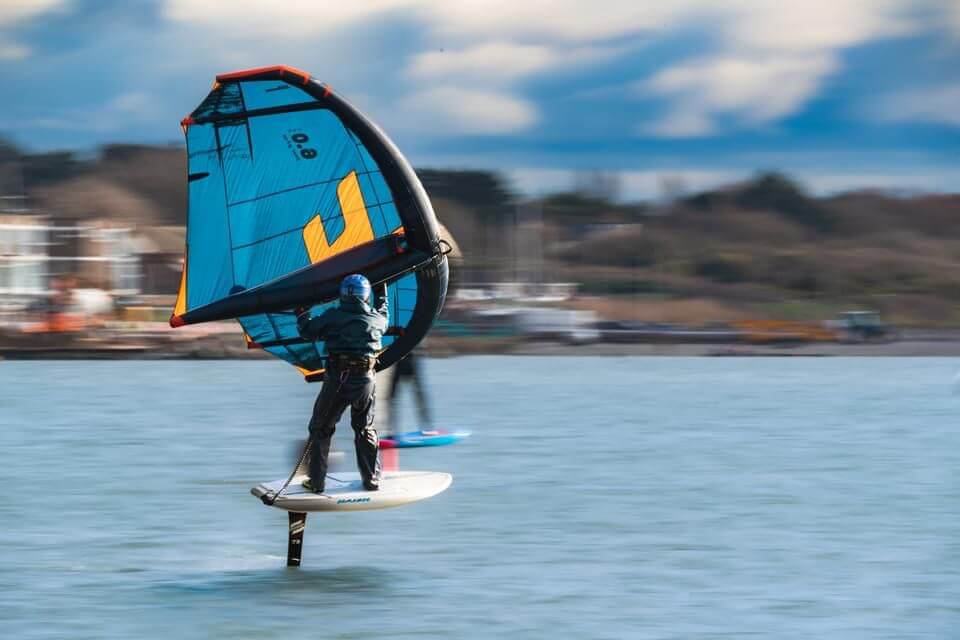
Short answer: yes — wingfoiling is one of the safer wind sports, especially when you learn in shallow, flat water with an instructor. The main risks are contact with the foil, collisions and getting tired or blown offshore, and all of them can be managed.
Wingfoiling, like any water sport, has its own inherent risks and hazards. It involves riding a hydrofoil while holding an inflatable wing, so it's important to understand the dangers involved and take the necessary precautions to stay safe. Here are some safety tips for wingfoiling:
-
Wear a buoyancy aid and helmet: This is especially important if you're just starting out as you will fall into the water.
-
Learn the proper techniques: Take lessons from a qualified instructor to learn how to set off, control speed, and turn safely.
-
Start slow: Start with a beginner-friendly setup and practice in calm water, such as the West Kirby Marine lake, before attempting more challenging conditions.
-
Check your equipment: Make sure your wing, board, and hydrofoil are in good condition before each session.
-
Be aware of your surroundings: Always be aware of other watercraft, swimmers, and potential hazards in the area. Know the rules of the road. Starboard tack has right of way ( riding with right shoulder at the front)
-
Never go out alone: It's always safer to go wingfoiling with a partner or in a group.
Remember, wingfoiling can be a thrilling and enjoyable sport, but only if you take the necessary precautions to stay safe. Be smart, stay vigilant, and have fun!
The real risks of wingfoiling
Most wingfoiling injuries are minor: bumps and cuts from your own board or foil when you fall. Understanding where the risk comes from makes it easy to avoid.
- The foil. The front wing and mast have thin edges, and the board can swing round when you fall. Fall away from the foil, flat and to the side, and protect your head with your arms.
- Speed. Once you're up on the foil, falls happen at 10–20 km/h. That's why beginners start with a large, slow, stable foil and a helmet.
- Wind and tide. Offshore wind, strong tidal currents and fading wind are what get people into trouble at sea. Learn where the wind and tide take you before you ride an open beach.
- Other water users. Swimmers, paddleboarders and boats don't hear you coming. Keep a good lookout and a wide berth.
- Fatigue and cold. Being tired leads to mistakes. Wear the right wetsuit for the season and come in before you're exhausted.
Essential safety kit
- A helmet and an impact vest or buoyancy aid
- A wetsuit suited to the water temperature (boots, gloves and a hood in winter)
- A wing leash and a board leash, so neither can blow away
- A beginner foil with a large, slow front wing
Why where you learn matters
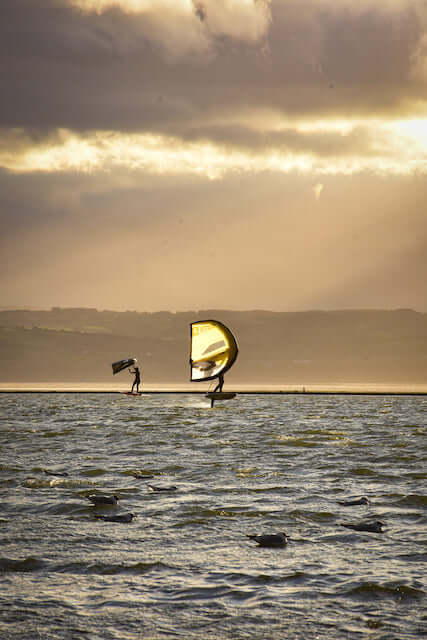
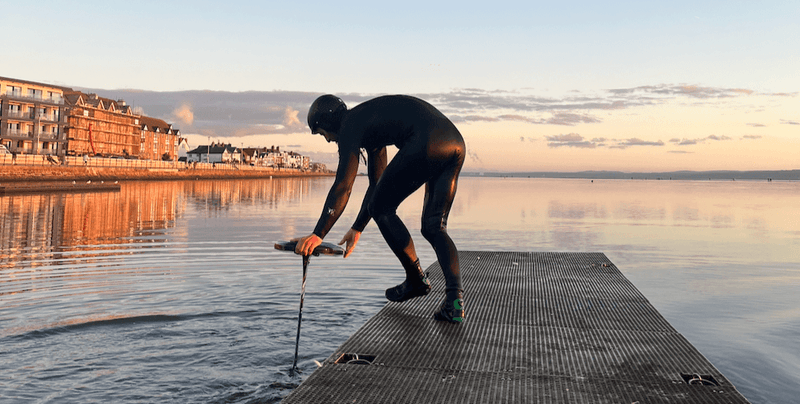
The safest place to learn is somewhere shallow, flat and enclosed. That's why we teach on West Kirby Marine Lake: the water is around chest deep, there's no tidal current and you can stand up after every fall. Most of our students learn to wingsurf without the foil first, then add the foil once they can handle the wing confidently.
Is wingfoiling safer than kitesurfing?
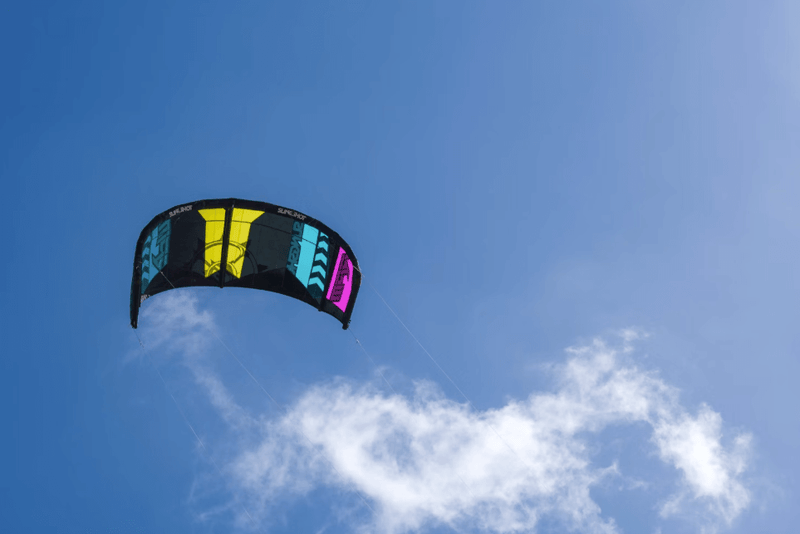
In some ways, yes. The wing isn't attached to you by lines, so letting go stops all the power instantly. There are no long lines to tangle, and you can't be lifted by a gust the way a kite can. The trade-off is the foil, which is why protective kit and good technique for falling matter.
Ready to try it safely? See our wingfoil lessons at West Kirby.
Ready to get on the water?
Pick a slot in the booking system. We confirm 1–2 days before once we've seen the wind. Nothing suitable yet? Get lesson notifications.